
How to Listen to Comms While Mixing Live Audio
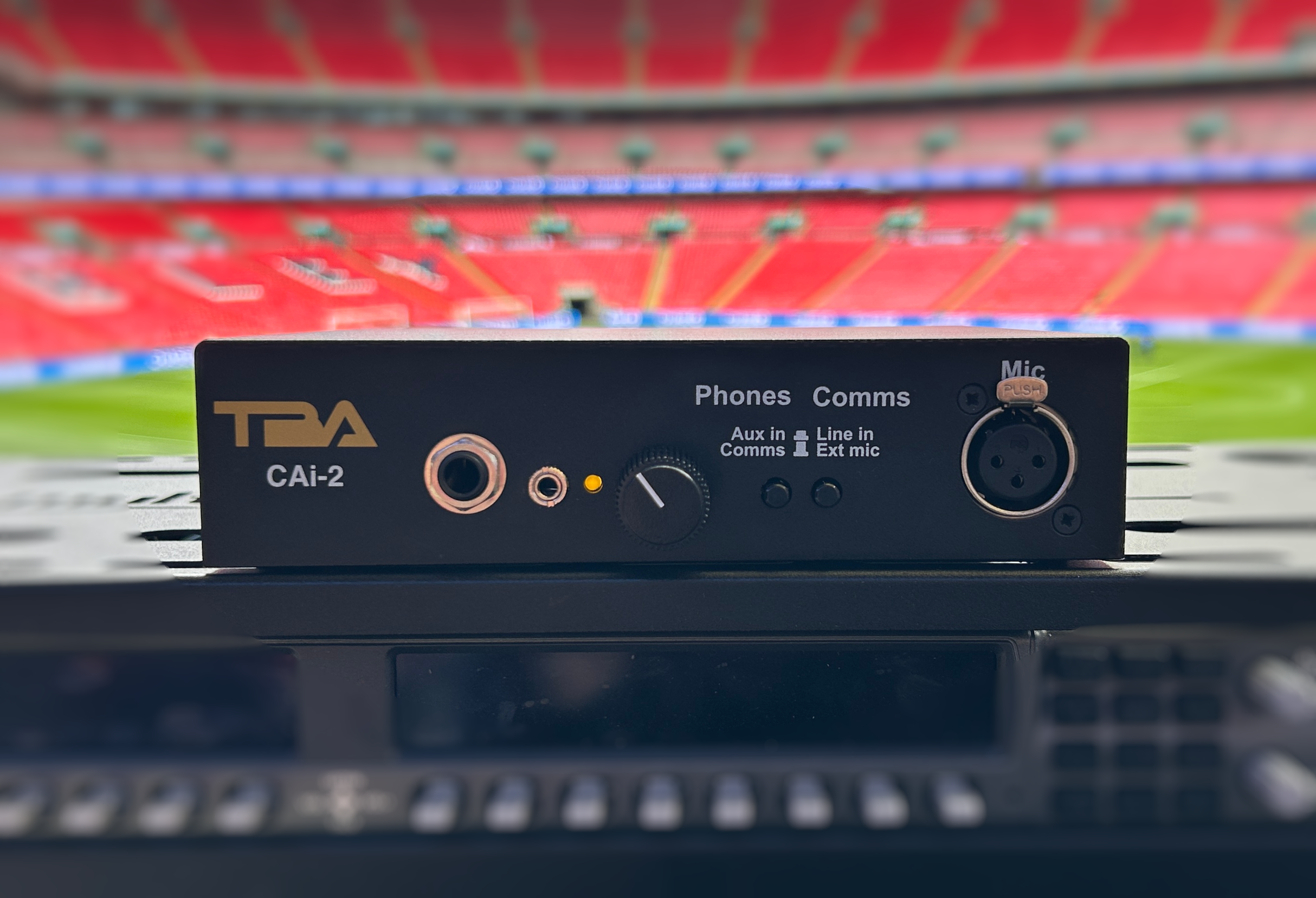
When mixing live sound, it’s often necessary to follow cues and communication from a show caller or production team via an intercom or comms system.
The challenge is that traditional comms headsets make it difficult to accurately hear the PA, console mix, or in-ear monitors at the same time. Engineers often end up removing one ear of the headset, swapping between comms and programme audio, or improvising unreliable workarounds.
Whether it’s a live concert, theatre production, broadcast environment, or corporate event, combining comms and audio monitoring cleanly is rarely straightforward.
Why listening to comms while mixing is difficult
Comms systems and audio monitoring are designed for different purposes, and they don’t integrate naturally.
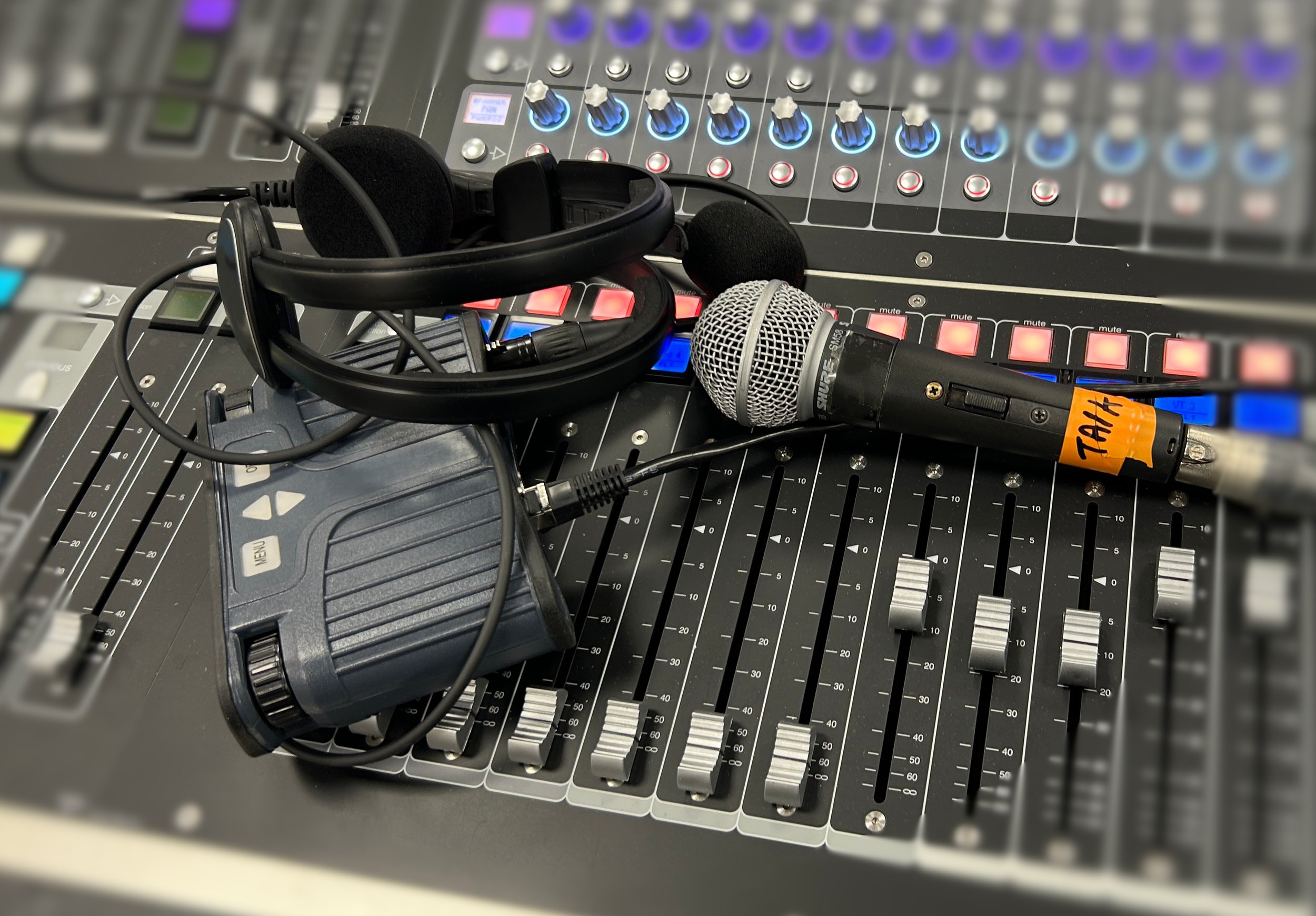
A standard comms headset combines both microphone and monitoring in a closed system. This works for communication, but it isolates you from the wider audio environment.
At the same time, the mix you’re working on is typically monitored through a console, PA, or in-ear system — completely separate from the comms path.
Because of this separation:
Comms audio isn’t easily available as a usable signal
Monitoring is split between different systems
There’s no simple way to combine comms and programme audio cleanly
As a result, trying to listen to both at once often means working around the limitations of the system rather than with it.
Typical workarounds
In practice, engineers tend to work around this problem rather than solve it properly.
Common approaches include:
Wearing one ear of the headset and leaving the other open to hear the PA
Taking the headset on and off to switch between comms and the mix
Running a comms speaker nearby and hoping it’s audible in a noisy environment
Using whatever interface happens to be available — if one was even specified
These approaches can work, but they all involve compromise.
Monitoring is inconsistent, communication can be missed, and the setup often depends on improvisation rather than a reliable system.
In situations where proper interfacing isn’t available, teams often rely on a “get out of trouble” solution — something that can quickly provide access to comms audio and basic routing when it’s needed.
A Better approach
A more effective approach is to separate comms audio from the headset and treat it like any other audio signal.
By accessing the microphone and headphone signals directly, comms can be routed into a mixing console or monitoring system. This allows levels to be controlled and, importantly, combined with programme audio in a controlled way.
Instead of choosing between comms and the mix, both can be monitored at the same time.
For engineers, this also solves a practical problem: the system they’re working with is rarely consistent. On any given day, the comms system, console, and available infrastructure may all be different — and there’s often no provision for dedicated interfacing such as a 2-wire to 4-wire unit.
The headset connection is often the only consistent point of access across different systems, allowing comms and audio to be integrated reliably regardless of the equipment provided.
Practical ways to integrate comms and audio
In practice, implementing this approach requires a way to access comms audio, route it into standard audio equipment, and monitor it reliably.
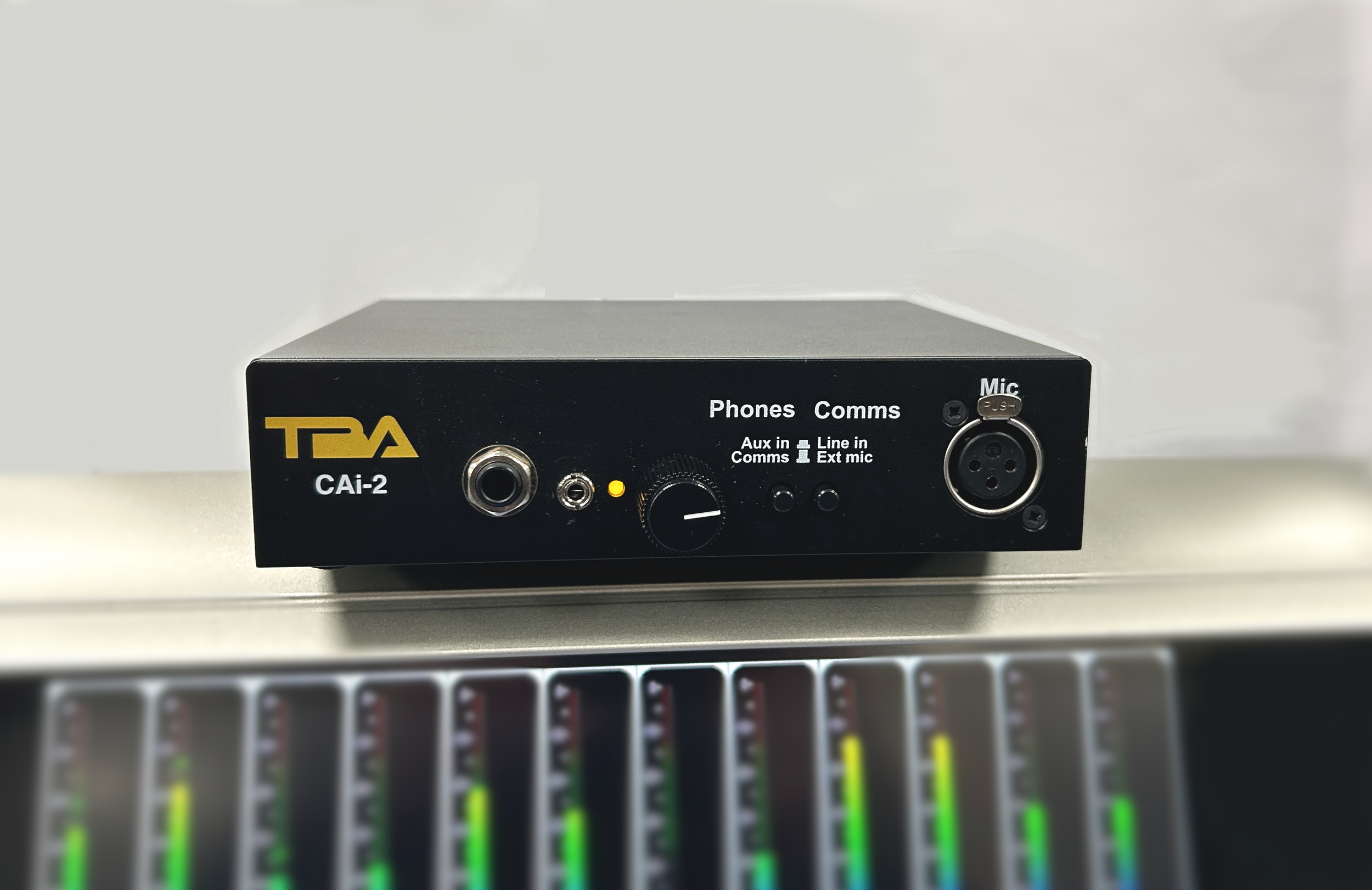
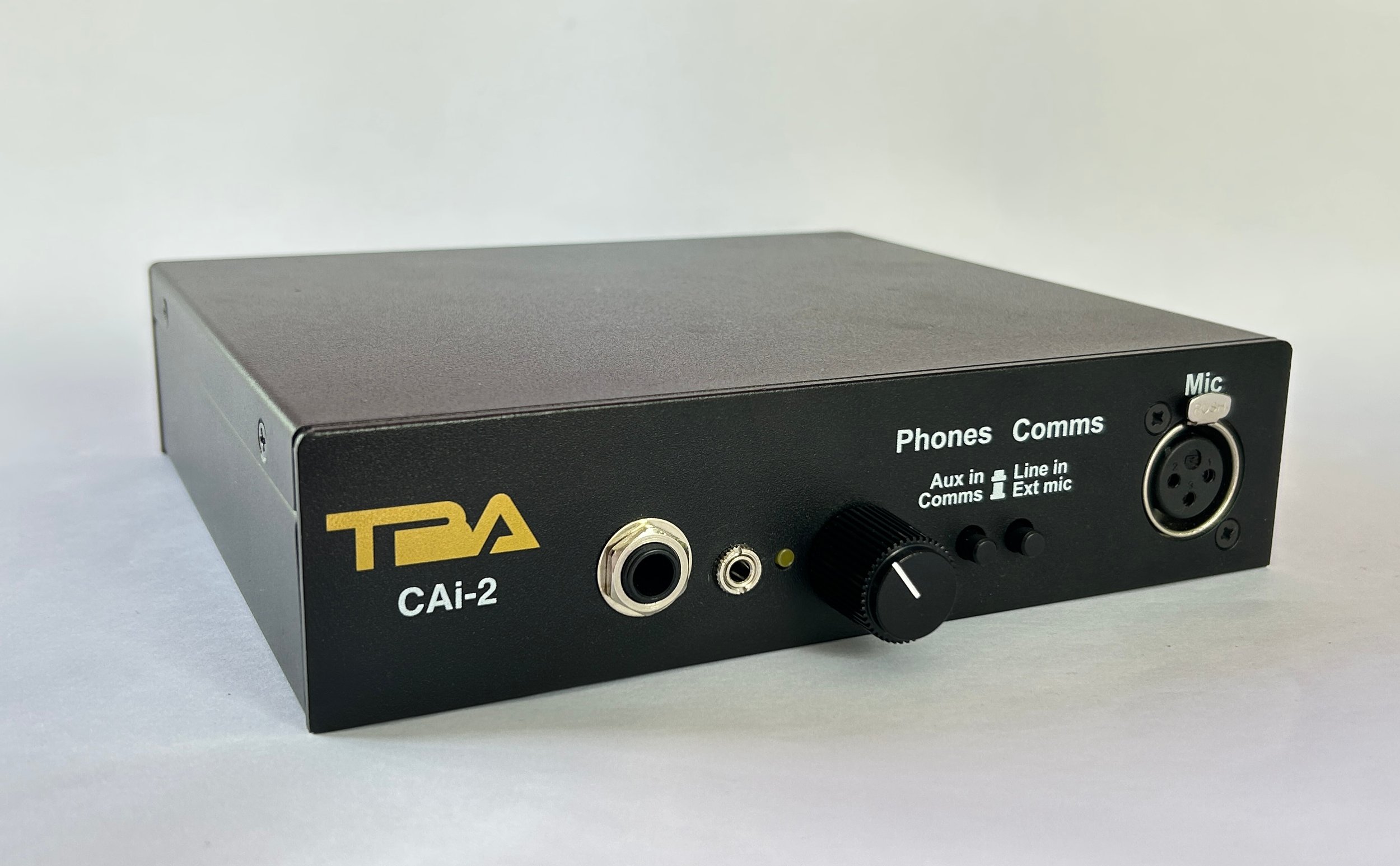
The CAi-2 is designed to provide this interface.
It connects to the comms system via the headset port and presents both microphone and headphone signals in a usable form. These can then be routed into a mixing console, recording system, external equipment, or monitoring chain as required.
This allows comms audio to be treated as part of the wider audio workflow, rather than a completely separate system.
This approach can be used with many common comms systems including Clear-Com, RTS, Green-GO, Riedel, Tecpro, and other headset-based intercom systems.
For monitor engineers, this makes it possible to integrate comms directly into an IEM mix alongside show audio.
For FOH engineers, the integrated headphone amplifier makes it possible to monitor comms clearly using acoustically transparent IFB earpieces, allowing cues and communication to remain audible without becoming isolated from the room or PA system.
The interface can also be used to route comms audio into recording equipment, broadcast systems, or external audio devices wherever intercom audio needs to be captured or distributed.
In addition to this, the unit can function as a simple interface for getting audio in and out of a comms system when no dedicated 2-wire to 4-wire interface is available. This makes it useful both for planned installations and situations where a quick, practical solution is needed.
CONCLUSION
Listening to comms while mixing doesn’t have to be a compromise.
By treating comms as part of the wider audio system, it becomes possible to monitor, route, and integrate it in a controlled and reliable way.
This approach avoids improvised solutions and provides a consistent way of working, regardless of the equipment or setup provided.
FAQs
-
Yes. By accessing the headset microphone and headphone signals, comms audio can be routed into standard audio equipment including mixing consoles, recording devices, and monitoring systems.
-
Yes. Using acoustically transparent earpieces and the integrated headphone amplifier, comms can be monitored while still maintaining awareness of the room and PA system.
-
Yes. The CAi-2 allows comms audio to be routed into monitoring systems and IEM mixes alongside programme audio.
-
Yes. Once presented as a standard audio signal, comms can be routed to recording equipment or DAWs in the same way as other audio sources.
-
Every CAi-2 ships with a standard 4-pin female-to-female XLR adaptor cable compatible with many common comms systems. Additional adaptor variants are also available for systems using different headset connector formats.
The CAi-2 headset interface is wired:
Pin 1: Mic -
Pin 2: Mic +
Pin 3: Speaker -
Pin 4: Speaker +
Compatible systems may include Clear-Com, RTS, Green-GO, Riedel, Tecpro, and other headset-based intercom systems using similar wiring conventions.
If you’re unsure whether your comms system is compatible, please get in touch before ordering.
-
The CAi-2 includes a built-in headphone amplifier and headset microphone interface, making it possible to monitor comms alongside programme audio using acoustically transparent earpieces while still speaking normally on the comms system. This allows cues and communication to remain audible without isolating you from the room or PA system.